An independent, nonpartisan guide to military storytellingNew here? Start here
Tale of WarRemembered · Recorded · Retold

The Library

Books that bear witness

A short, hand-picked reading list: the classic accounts, the great memoirs and oral histories, the books that explain how war is remembered, and simple gear for recording your own family's stories.

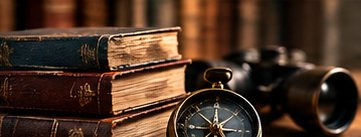
Old leather-bound books beside a brass compass and binoculars
Titles link to Amazon so you can compare editions and formats. We choose books on merit only; no publisher pays to be listed. See our disclosures.

Ancient and Classic Accounts

The oldest surviving war writing, read in modern translations that add maps, notes and context.

The Iliad (translated by Robert Fagles)

Homer; translated by Robert Fagles · 1990

The Iliad shows how a war was carried in memory and song for generations before anyone wrote it down. Fagles's translation is readable aloud, which suits a poem that began as spoken performance.

View on Amazon

The Landmark Herodotus: The Histories

Herodotus; edited by Robert B. Strassler, translated by Andrea L. Purvis · 2007

Herodotus set out to keep great deeds from being forgotten, and he openly reports what different people told him, even when their stories disagree. Reading him shows the earliest attempt to gather many voices into one history.

View on Amazon

The Landmark Thucydides: A Comprehensive Guide to the Peloponnesian War

Thucydides; edited by Robert B. Strassler (Richard Crawley translation, revised) · 1996

Thucydides explains his own method: checking eyewitness reports against one another and admitting where memory fails. This edition's maps and notes make that method easy to follow for first-time readers.

View on Amazon

The Landmark Julius Caesar: The Complete Works

Julius Caesar; edited and translated by Kurt A. Raaflaub · 2017

Caesar's Gallic War is a commander's own report of his campaigns, written in the third person and with a clear interest in how Rome would see him. It is an ideal case for learning to read a firsthand account with care.

View on Amazon

The Landmark Xenophon's Anabasis

Xenophon; edited by Shane Brennan and David Thomas, translated by David Thomas · 2021

Xenophon marched with ten thousand Greek soldiers trying to get home from Persia and later wrote the journey down himself. It is one of the earliest soldier's memoirs, with all the strengths and blind spots that implies.

View on Amazon

Memoirs from the World Wars

Personal accounts by people who served, written close enough to the events to carry their weight.

Storm of Steel

Ernst Jünger · 1920

Jünger built this account of the Western Front from the diaries he kept as a German infantry officer, and he revised it several times over his long life. Comparing it with British memoirs shows how differently the same war could be remembered.

View on Amazon

Good-Bye to All That

Robert Graves · 1929

Graves, a British officer and poet, wrote this memoir of the trenches about a decade after the war ended. It helped shape how a whole generation of readers came to picture the First World War.

View on Amazon

All Quiet on the Western Front

Erich Maria Remarque · 1929

This is a novel, not a memoir, but its author served as a German soldier on the Western Front. It is a useful example of how fiction written by a veteran can shape public memory as strongly as any history.

View on Amazon

Testament of Youth

Vera Brittain · 1933

Brittain served as a volunteer nurse and lost her brother, her fiancé and close friends in the war. Her memoir is a reminder that the record of a war includes those who served behind the lines and those who grieved at home.

View on Amazon

With the Old Breed: At Peleliu and Okinawa

E. B. Sledge · 1981

Sledge kept secret notes in his pocket New Testament while serving as a Marine in the Pacific, and decades later shaped them into this memoir. It shows how a veteran can return to his own wartime record and give it lasting form.

View on Amazon

Oral History Collections

Books built from interviews, where many voices tell one war from many angles.

Everything We Had: An Oral History of the Vietnam War

Al Santoli · 1981

Santoli, himself a Vietnam veteran, gathered the accounts of thirty-three Americans who served and let them speak in their own words. It is a model of an interviewer stepping back so the speakers can be heard.

View on Amazon

"The Good War": An Oral History of World War Two

Studs Terkel · 1984

Terkel interviewed veterans, war workers, and civilians on several continents, and the quotation marks in the title hint at how complicated their memories were. The book won the Pulitzer Prize for general nonfiction and remains a standard example of the form.

View on Amazon

Bloods: An Oral History of the Vietnam War by Black Veterans

Wallace Terry · 1984

Terry, a journalist who covered the war, recorded the experiences of twenty Black servicemen. The collection preserves perspectives that general histories of the war often left out.

View on Amazon

The Unwomanly Face of War

Svetlana Alexievich · 1985

Alexievich interviewed hundreds of Soviet women who served in the Second World War as snipers, medics, pilots and more. It shows how whole groups of veterans can go unrecorded until someone asks them directly.

View on Amazon

Forgotten Voices of the Great War

Max Arthur, in association with the Imperial War Museum · 2002

This book draws on the sound archive of Britain's Imperial War Museum, where First World War veterans were recorded late in their lives. It shows why recording older veterans while there is still time matters so much.

View on Amazon

How Memory and History Work

Books about how wars are remembered, written about, and turned into shared stories.

The Great War and Modern Memory

Paul Fussell · 1975

Fussell, a Second World War veteran, traced how soldiers' letters, poems and memoirs turned the First World War into a lasting set of images and phrases. It is the classic study of how literature shapes collective memory.

View on Amazon

The Face of Battle

John Keegan · 1976

Keegan compared Agincourt, Waterloo, and the Somme from the point of view of the ordinary soldier rather than the general. He also asked hard questions about how much historians can really know about what happens in combat.

View on Amazon

The Things They Carried

Tim O'Brien · 1990

This is a work of fiction, written by a Vietnam veteran, that deliberately blurs memory and invention. It raises a question every reader of war stories eventually faces: what makes a story true?

View on Amazon

Sites of Memory, Sites of Mourning: The Great War in European Cultural History

Jay Winter · 1995

Winter looks at war memorials, rituals, and art to show how communities and families grieved after 1918. It helps explain why remembrance often focuses on loss and mourning more than on battles.

View on Amazon

The Soldiers' Tale: Bearing Witness to Modern War

Samuel Hynes · 1997

Hynes, a Marine aviator in the Second World War, read hundreds of soldiers' personal narratives from the twentieth century's wars. He explains what these accounts can tell us that official histories cannot.

View on Amazon

Recording Your Own Family's Stories

A practical guide and a few simple tools for interviewing a veteran and keeping the results safe.

Doing Oral History

Donald A. Ritchie · 1995

Ritchie, a longtime historian with the U.S. Senate Historical Office, wrote a clear handbook covering interview planning, questions, legal releases, and preservation. Later editions update the advice on recording technology.

View on Amazon

Handheld digital audio recorder

Recording gear

A dedicated recorder that saves uncompressed WAV files gives cleaner, more dependable sound than a phone left on a table. Look for simple controls, a headphone jack, and removable memory cards.

Shop on Amazon

Lavalier (clip-on) microphone

Recording gear

A small microphone clipped near the speaker's collar picks up a soft voice clearly and reduces room noise. Check that the plug matches your recorder or phone before you buy.

Shop on Amazon

Archival photo storage box

Recording gear

Old photographs, letters, and service papers last longer in acid-free, lignin-free boxes and sleeves kept in a cool, dry room. Labeled storage also keeps each item tied to the story that explains it.

Shop on Amazon
TaleOfWar.com is available to the right steward. Inquire about acquiring this site.